
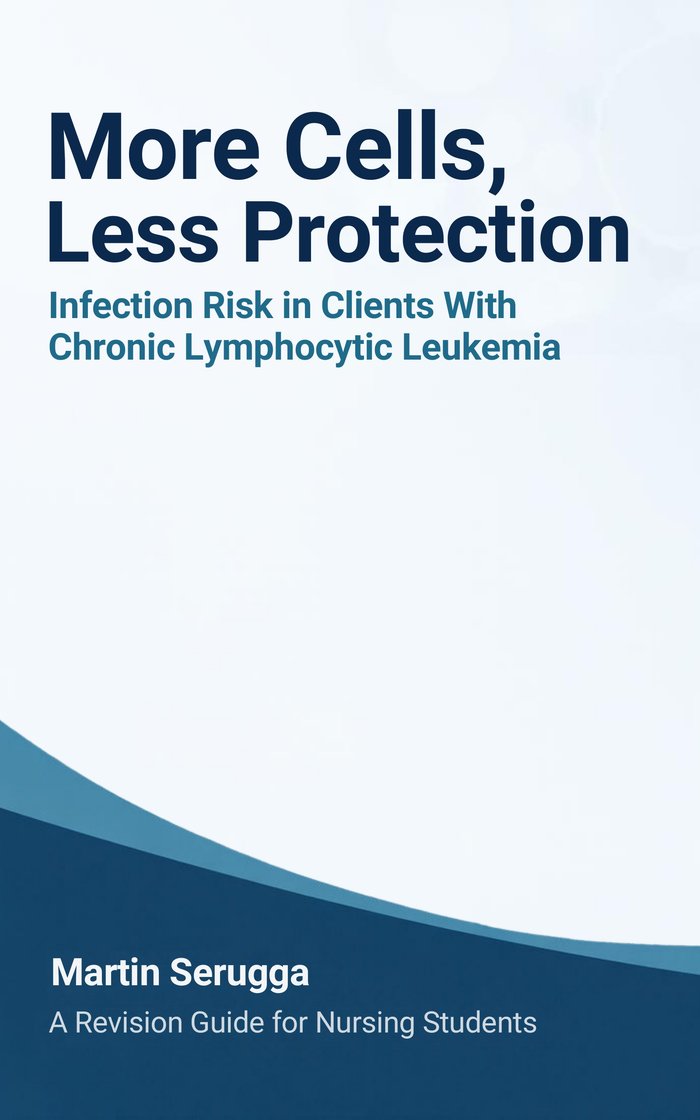
More cells,
less protection.
A high white count usually means the body is fighting hard. In CLL, the count measures the cancer, not the client's defenses.
| Finding | Value | What it means |
|---|---|---|
| ↑ | Lymphocytes | More malignant B cells |
| ↓ | Antibodies | Low (hypogammaglobulinemia) |
| ↓ | Protection | Infection risk rises |
| ! | Fever | Report at once |
The mistake this guide fixes
A high count is not the same as strong defenses.
What students assume
- More white cells means more protection
- No treatment yet means no infection risk
- A low-grade fever can be watched
- The count tells the whole story
What happens in CLL
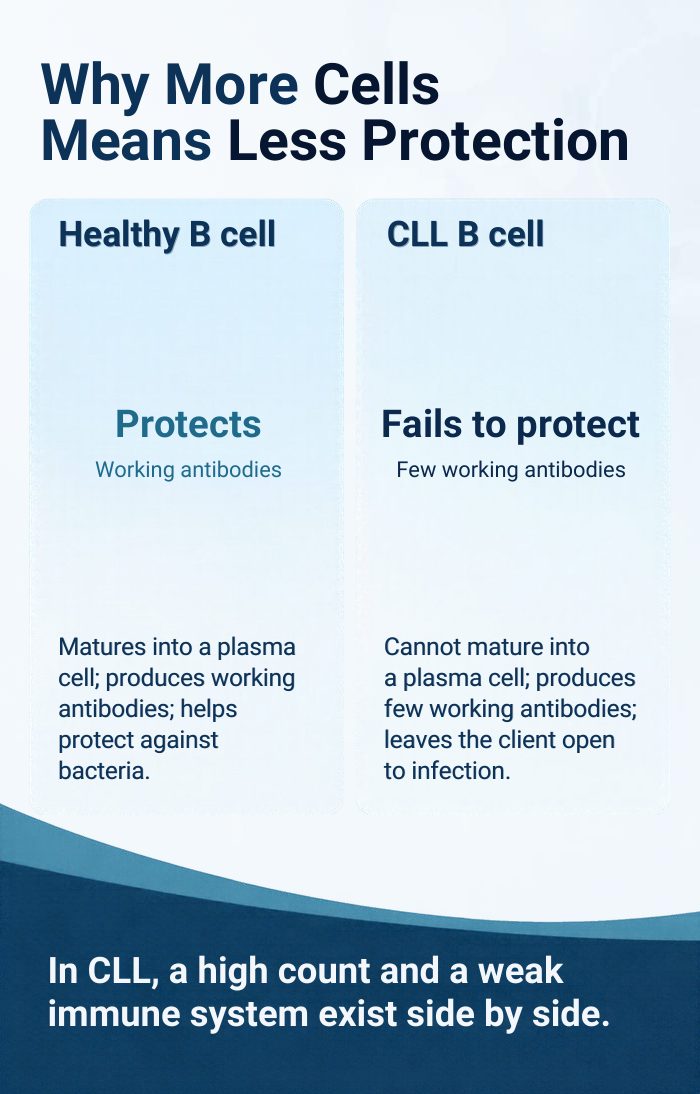
- The B cells are mature-looking but dysfunctional
- They cannot become antibody-making plasma cells
- Antibody levels fall, and infection risk rises
- Fever is reported at once; live vaccines are avoided
That is why the nurse reports fever promptly and prepares for cultures, protects the client from exposure, avoids live vaccines such as MMR and varicella, and gives inactivated vaccines such as the pneumococcal vaccine as ordered.
What's inside
Ten parts. Twenty pages.
Start with the one-page overview, or follow the three-day reading plan inside the guide.
- The Argument at a GlanceWhat a high count means in CLL, and what it does not.
- The Scope of the ProblemWhat CLL is, and why the count misleads.
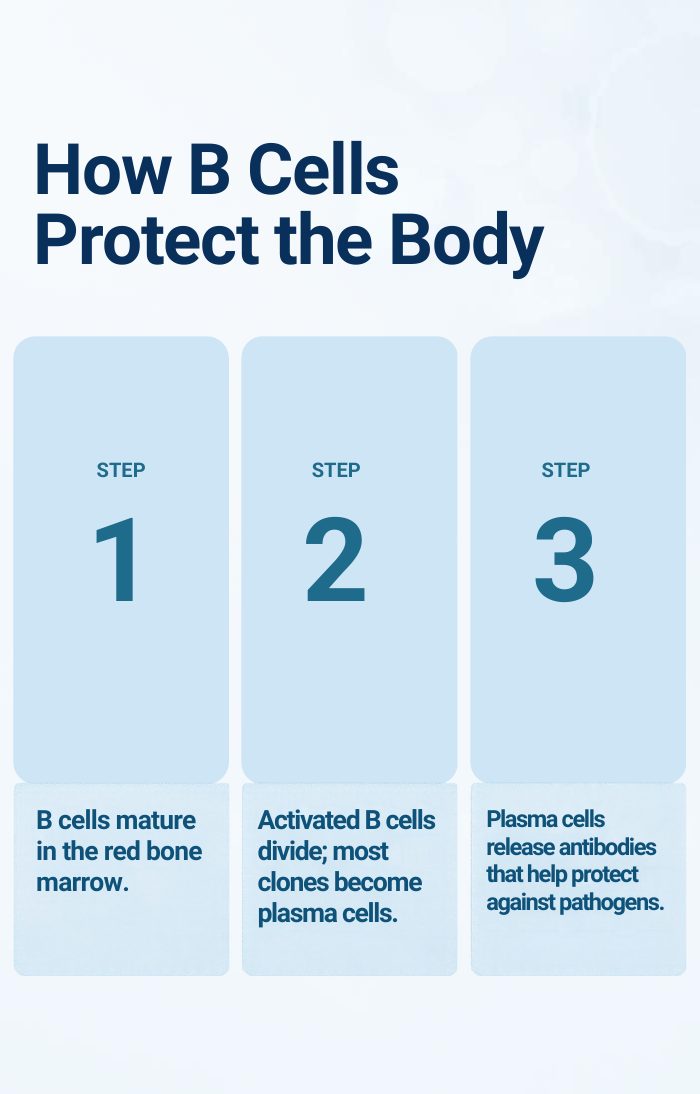
- How B Cells Protect the BodyThe normal mechanism, step by step.
- Why More Cells Means Less ProtectionHealthy B cells vs. CLL B cells.
- What to MonitorFever, vital signs, counts and signs of infection.
- Anticipate vs. the TrapsFour findings to expect, and four mistakes to avoid.
- Protecting the ClientInfection precautions and vaccines.
- The Full ArgumentThe complete essay, with sources.
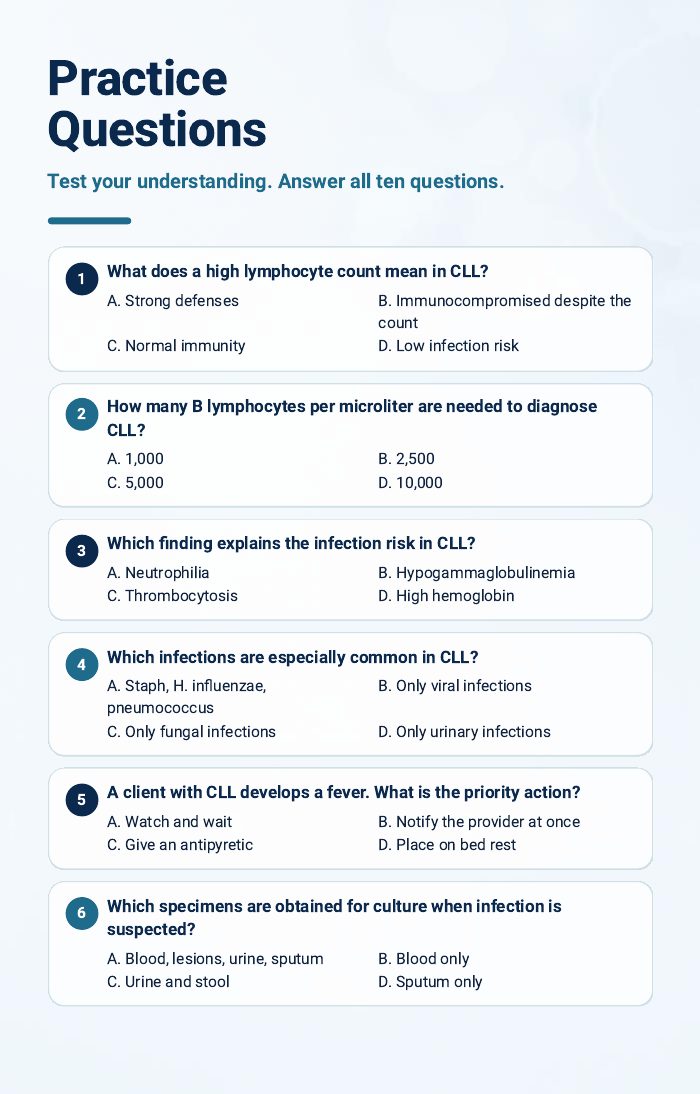
- Practice Questions10 exam-style questions to test your understanding.
- Rapid Recall, Summary Table and ReferencesKey points at a glance, in APA 7 format.
Look inside
See the pages before you buy.
Try a question from the book
Would you pass this one?
Which finding explains the infection risk in CLL?
The guide has 9 more questions like this,. Get all 10 for $2.99
Who it's for
Written by a nursing student, for nursing students.
LPN and RN students
Studying immunity, blood disorders and cancer care, and wanting the reasoning behind each nursing action.
Exam candidates
Priority questions about fever, infection control and vaccines reward knowing why the client is at risk.
Before clinicals
A quick refresher before caring for a client with leukemia or any immunocompromised client.
Get the guide
Less than a coffee. Ready in seconds.
20-page PDF in portrait format, or a reflowable EPUB that adjusts to any screen. Payments are handled securely by each store.
Questions
Before you buy
What format is it?
The PDF edition is 20 pages and opens on any phone, tablet or computer. The EPUB edition reflows to fit your screen.
What is it based on?
Saunders Comprehensive Review for the NCLEX-PN (9th ed.), Memmler's The Human Body in Health and Disease, and the StatPearls review of chronic lymphocytic leukemia. All sources are listed in APA 7 format.
Do I need the other guides?
No. Each guide stands on its own. Contact, Not Respiratory covers C. difficile, Antibodies Up, Complement Down covers lab values in lupus, and Inflammation, Not Fever covers aspirin in rheumatoid arthritis.
Can I use it for clinical decisions?
No. It is a study aid for nursing students, not a substitute for your facility's policies, your drug reference or professional clinical judgment.
Also in the series
Contact, Not Respiratory: why a client with C. difficile needs gown, gloves and soap and water, not a mask. Antibodies Up, Complement Down: which lab values rise and which fall in lupus. Inflammation, Not Fever: why aspirin is ordered for rheumatoid arthritis. Confusion, Not Thirst: why hyponatremia shows up as confusion, not thirst, in older adults. See all guides