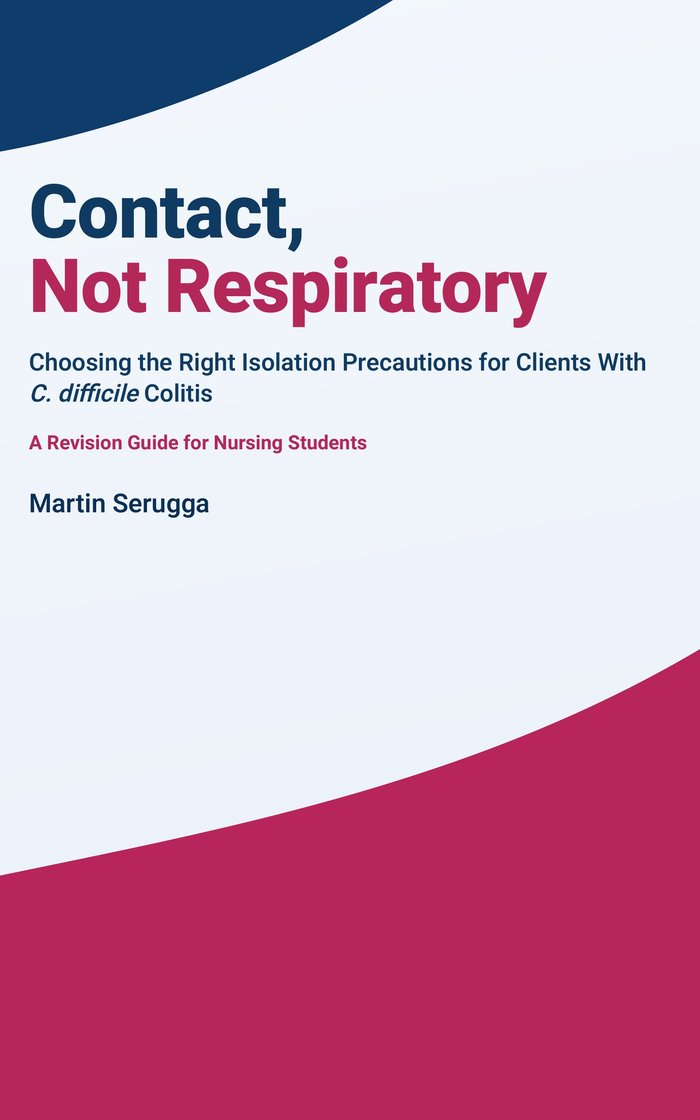
Contact.
Not respiratory.
A short, evidence-based guide to the isolation decision nursing students get wrong most often: why a client with C. difficile needs gown, gloves and soap and water, and why a mask protects nobody.
- Gown required
- Gloves required
- Soap and water
- No alcohol rub
The mistake this guide fixes
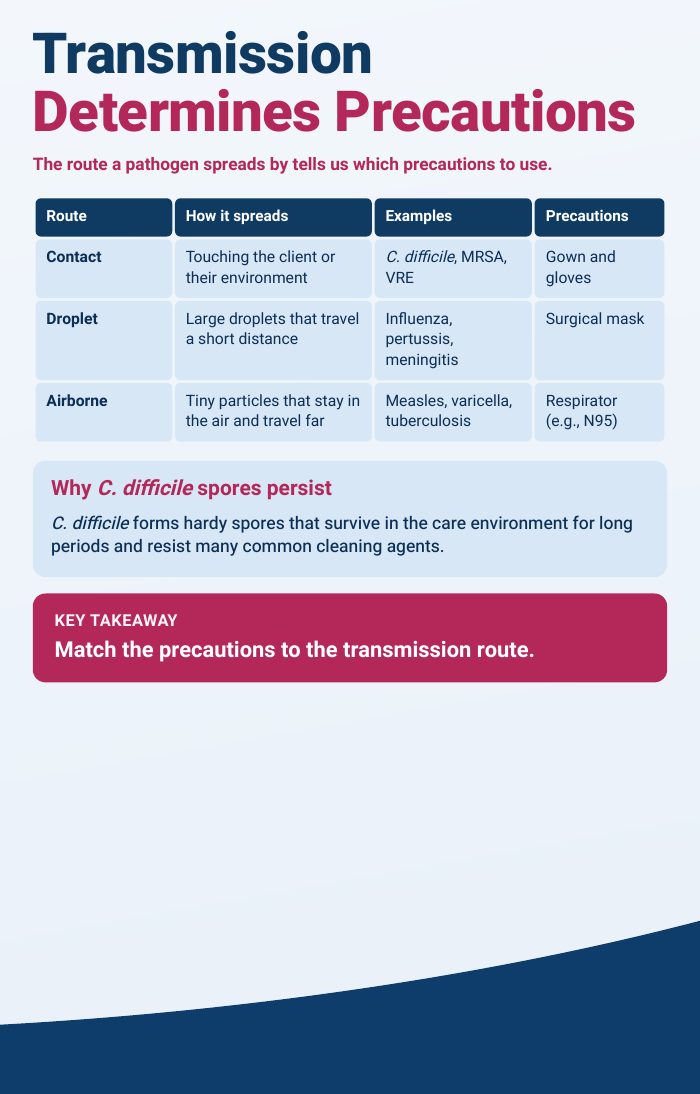
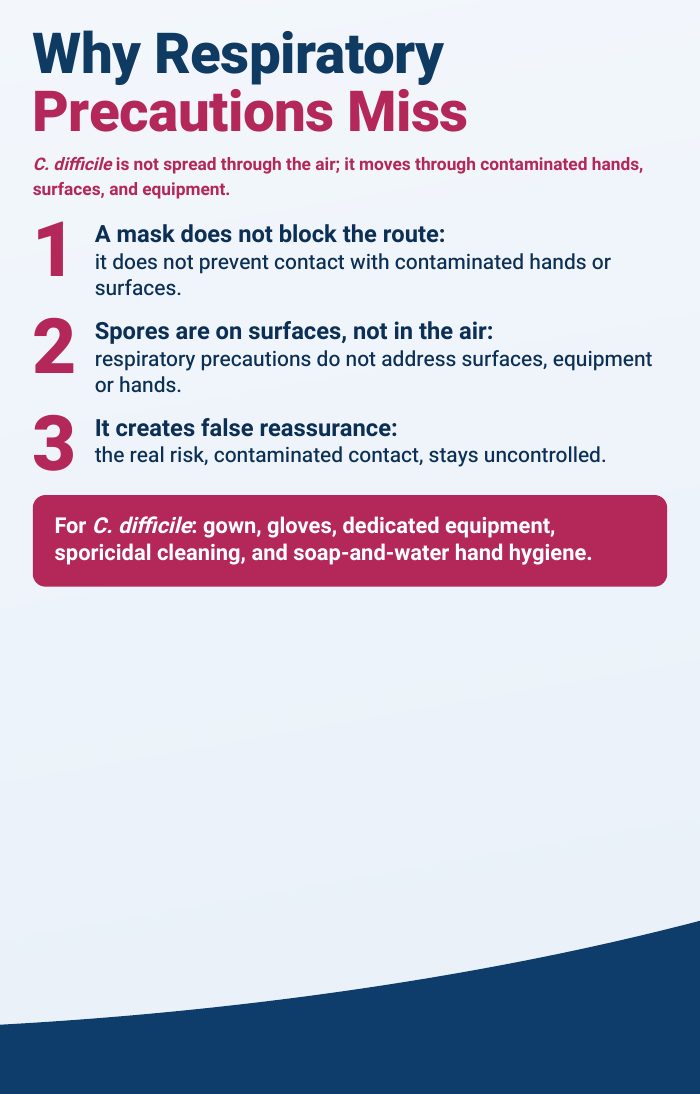
The mask feels safe. It guards the wrong route.
What students reach for
- A surgical mask, which is a droplet precaution
- An N95 respirator, which is an airborne precaution
- Alcohol hand rub, which does not kill spores
- A shared stethoscope carried room to room
What C. difficile needs
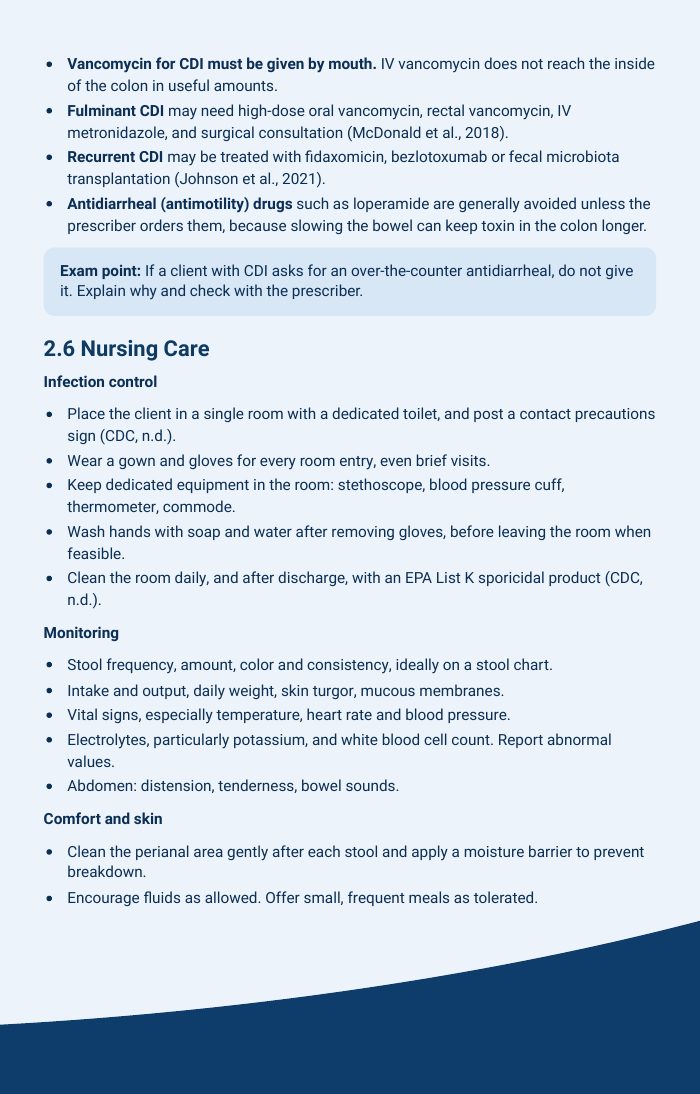
- Gown and gloves for every room entry
- A private room with a dedicated toilet
- Hand washing with soap and water
- Dedicated equipment and sporicidal (EPA List K) cleaning
Spores shed in diarrheal stool can survive on dry surfaces for up to five months. Contact precautions are the only category built to break this chain.
What's inside
Six parts. One evening of study.
Read it front to back over three days with the built-in reading plan, or jump straight to the part you need before an exam or clinical shift.
- The ArgumentThe evidence for contact precautions, from CDC, IDSA/SHEA and nursing review texts.
- Revision NotesThe organism, risk factors, signs, testing, treatment, nursing care and PPE order.
- Practice Questions12 exam-style practice questions, including select-all-that-apply.
- Rapid RecallFive things to remember, key numbers and common exam traps.
- ReferencesTen sources in APA 7 format for further reading.
- Safety & Infection ControlWhere this topic sits on the 2026 NCLEX-PN® test plan.
Look inside
See the pages before you buy.
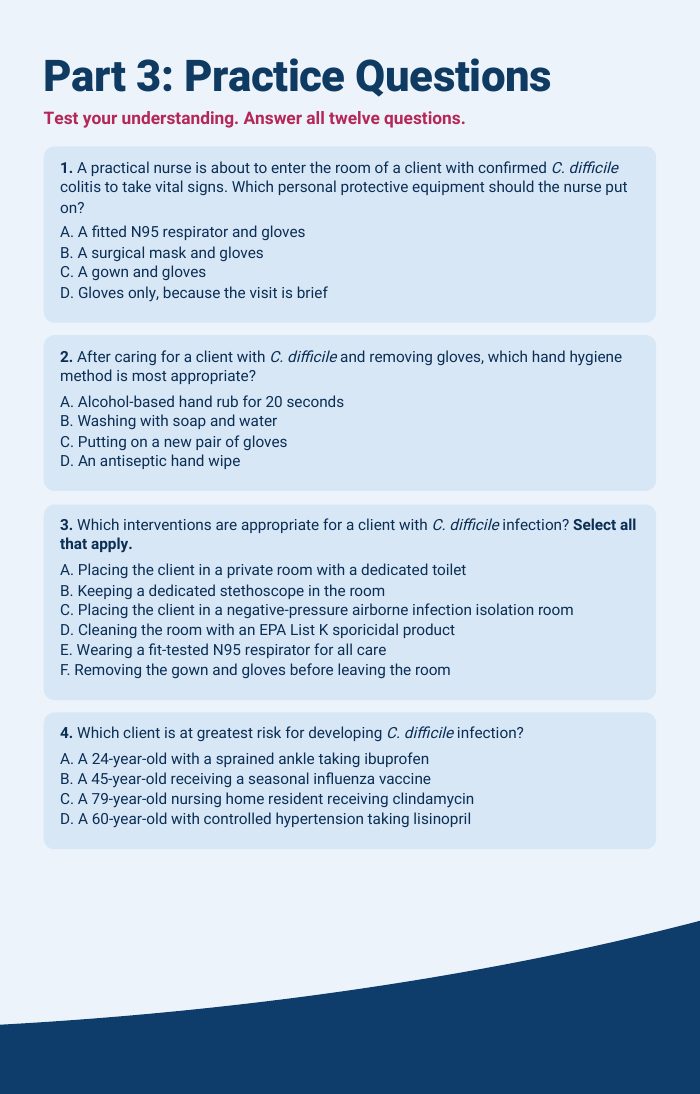
Try a question from the book
Would you pass this one?
After caring for a client with C. difficile and removing gloves, which hand hygiene method is most appropriate?
The guide has 11 more questions like this,. Get all 12 for $2.99
Who it's for
Written by a nursing student, for nursing students.
LPN and RN students
Covering infection control in fundamentals or med-surg and wanting the reasoning, not just the rule.
NCLEX-PN® candidates
Safety and Infection Prevention and Control makes up 10–16% of the 2026 exam.
Before clinicals
A quick refresher before your first shift with a client on contact precautions.
Get the guide
Less than a coffee. Ready in seconds.
21-page PDF in portrait format, or a reflowable Kindle edition that adjusts to any screen. Payments are handled securely by each store.
Questions
Before you buy
What format is it?
The PDF edition is 21 pages and opens on any phone, tablet or computer. The Kindle edition reflows to fit your screen and works in the free Kindle app.
Is it up to date?
It draws on current CDC prevention guidance, the IDSA/SHEA clinical practice guidelines including the 2021 treatment update, and the 2026 NCLEX-PN test plan.
How long does it take to read?
Part 1 is a short essay you can read in one sitting. The whole guide, practice questions included, fits into one evening or the three-day reading plan inside.
Can I use it for clinical decisions?
No. It is a study aid for nursing students, not a substitute for your facility's policies or professional clinical judgment.
Also in the series
Antibodies Up, Complement Down: which lab values rise and which fall in systemic lupus erythematosus, and why. Inflammation, Not Fever: why aspirin is ordered for rheumatoid arthritis. More Cells, Less Protection: why a client with CLL is at risk of infection despite a high white count. Confusion, Not Thirst: why hyponatremia shows up as confusion, not thirst, in older adults. See all guides