
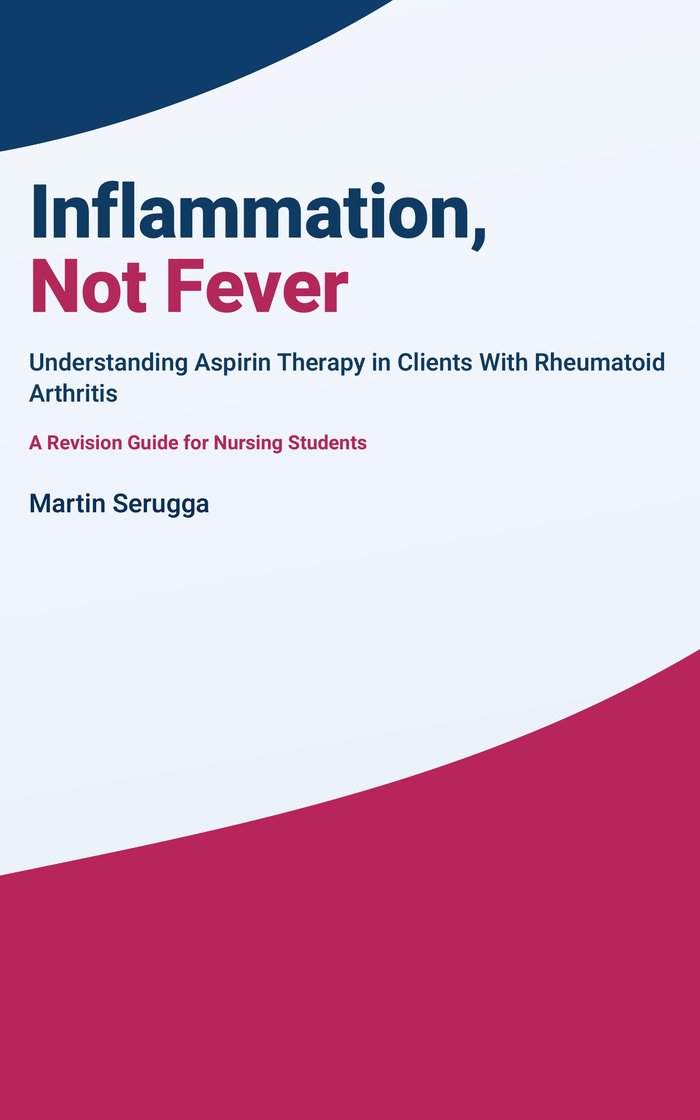
Inflammation,
not fever.
When aspirin is ordered for rheumatoid arthritis, it is there to calm inflamed joints. Learn why, how it works, and what the nurse watches for.
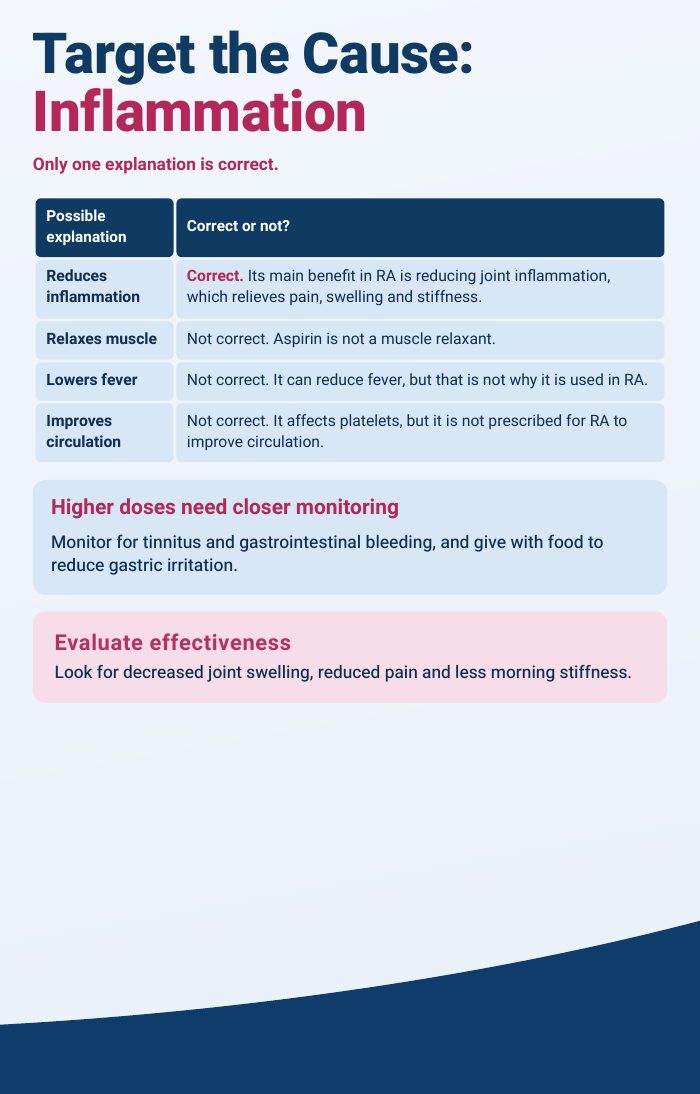
| Why? | Reason ordered | Verdict |
|---|---|---|
| ✓ | Reduce inflammation | The purpose in RA |
| ✕ | Relax muscle spasm | Aspirin is not a muscle relaxant |
| ✕ | Lower fever | A side benefit, not the reason |
| ✕ | Improve circulation | It affects platelets, not blood flow |
The mistake this guide fixes
A familiar drug can be ordered for an unfamiliar reason.
What students assume
- Aspirin is there for a fever or a headache
- It will relax stiff, tight muscles
- It improves blood flow to sore joints
- It stops RA from damaging the joints
What aspirin does in RA
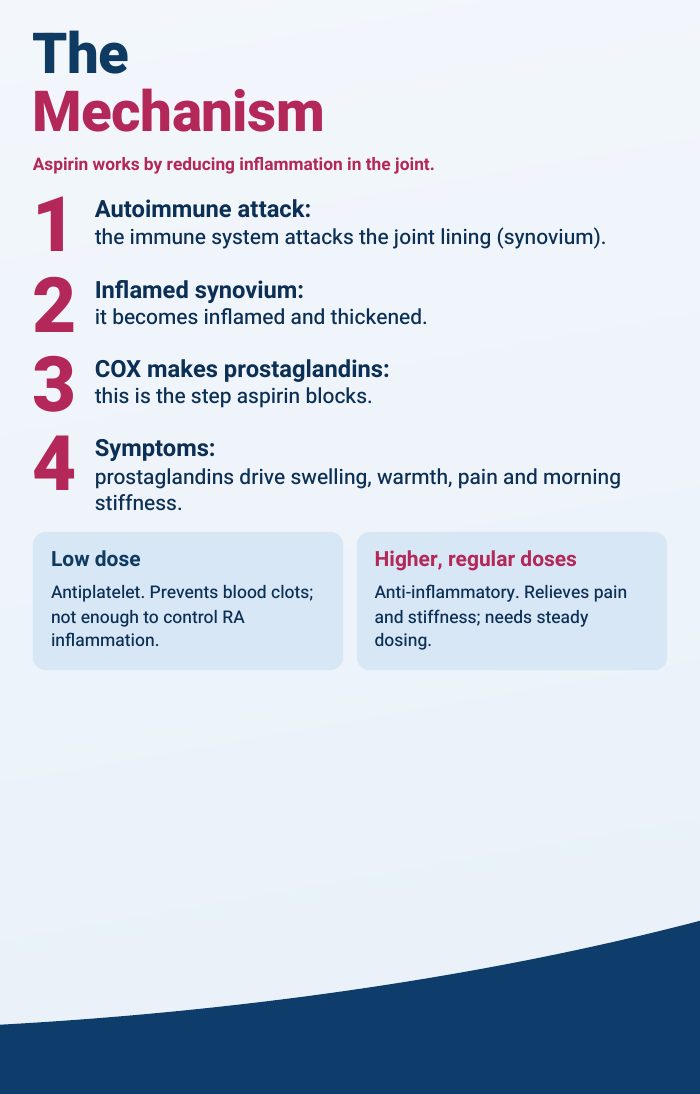
- Blocks COX, so fewer prostaglandins are made
- Reduces joint inflammation, pain and swelling
- Needs higher, regular doses to work
- Eases symptoms while DMARDs treat the disease
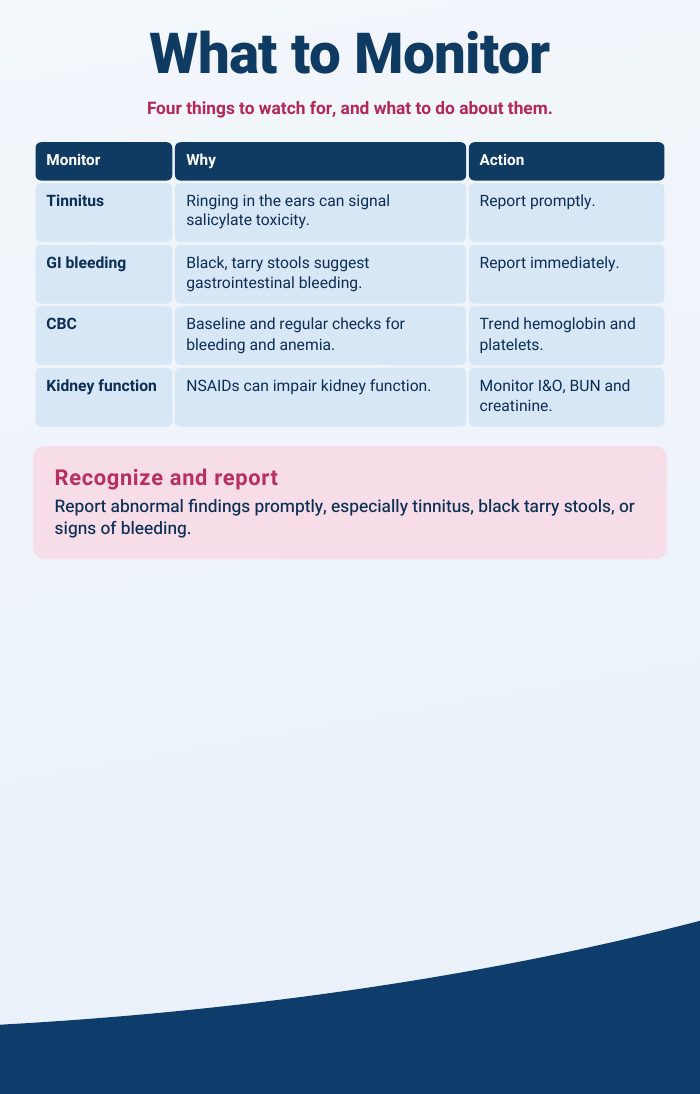
Aspirin blocks the third step. Because the anti-inflammatory effect needs higher, regular doses, the nurse watches for ringing in the ears, a sign of salicylate toxicity, and for black, tarry stools, a sign of GI bleeding.
What's inside
Nine parts. Fifteen pages.
Start with the one-page overview, or follow the three-day reading plan inside the guide.
- The Argument at a GlanceWhy aspirin is ordered in RA, and why the other reasons miss the mark.
- The MechanismFrom autoimmune attack to joint pain, and why the dose decides the effect.
- What to MonitorTinnitus, GI bleeding, blood counts and kidney function.
- Anticipate vs. the TrapsFour findings to expect, and four mistakes to avoid.
- The Full ArgumentThe complete argument, with what the nurse should anticipate and a conclusion.
- Practice Questions10 exam-style questions to test your understanding.
- Rapid RecallFive things to remember and the key numbers.
- Summary TableWhat aspirin does, and what the nurse does.
- ReferencesEvery source in APA 7 format.
Look inside
See the pages before you buy.
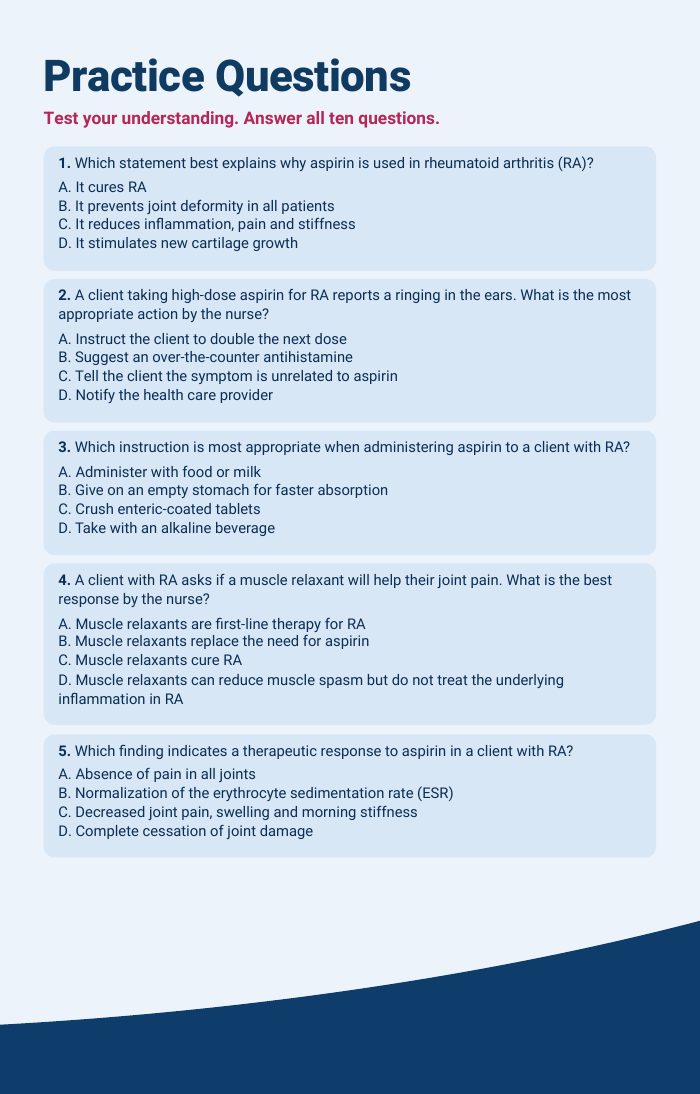
Try a question from the book
Would you pass this one?
Aspirin reduces inflammation in RA by which mechanism?
The guide has 9 more questions like this,. Get all 10 for $2.99
Who it's for
Written by a nursing student, for nursing students.
LPN and RN students
Studying pharmacology and musculoskeletal disorders and wanting the reasoning behind each order.
Exam candidates
"What is this drug for?" questions reward knowing the purpose, not just the drug's effects.
Before clinicals
A quick refresher before giving aspirin or other NSAIDs to a client with arthritis.
Get the guide
Less than a coffee. Ready in seconds.
15-page PDF in portrait format, or a reflowable EPUB that adjusts to any screen. Payments are handled securely by each store.
Questions
Before you buy
What format is it?
The PDF edition is 15 pages and opens on any phone, tablet or computer. The EPUB edition reflows to fit your screen.
What is it based on?
Every answer is checked against the ATI PN Pharmacology for Nursing review module (Edition 9.0), with a peer-reviewed study on tinnitus and salicylate toxicity. All sources are listed in APA 7 format.
Do I need the other guides?
No. Each guide stands on its own. Contact, Not Respiratory covers infection control for C. difficile, Antibodies Up, Complement Down covers lab values in lupus, and More Cells, Less Protection covers infection risk in leukemia.
Can I use it for clinical decisions?
No. It is a study aid for nursing students, not a substitute for your facility's policies, your drug reference or professional clinical judgment.
Also in the series
Contact, Not Respiratory: why a client with C. difficile needs gown, gloves and soap and water, not a mask. Antibodies Up, Complement Down: which lab values rise and which fall in lupus. More Cells, Less Protection: why a client with CLL is at risk of infection despite a high white count. Confusion, Not Thirst: why hyponatremia shows up as confusion, not thirst, in older adults. See all guides